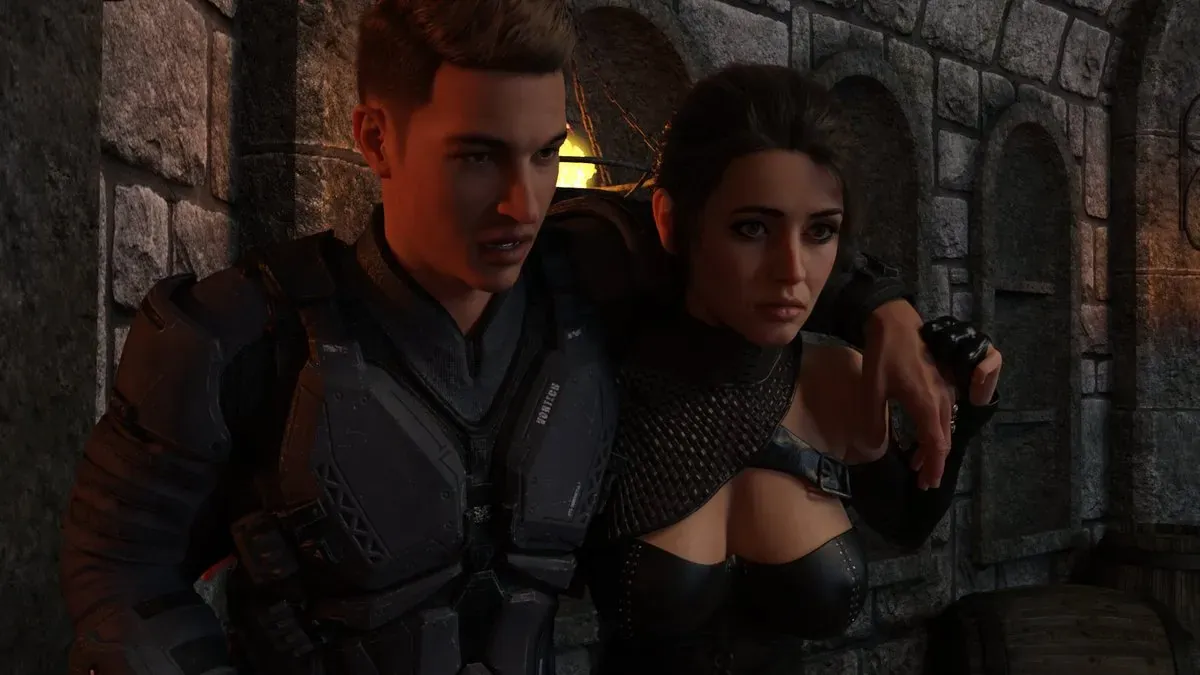
Dungeon Days
Play Dungeon Days
Dungeon Days Screenshots

















Dungeon Days review
Explore immersive adventures and steamy encounters in this captivating title
Imagine diving into a sprawling fantasy world where every decision shapes your path through shadowy dungeons filled with thrilling challenges and intimate rewards. Dungeon Days, the standout adult game from Abnormalsoftware, hooks you from the first moment with its seamless exploration and reactive storytelling. I’ve lost count of the hours I’ve spent uncovering hidden secrets and building relationships that feel incredibly real. Whether you’re a fan of deep immersion or seeking bold adult experiences, this guide uncovers what makes Dungeon Days a must-play. Let’s journey through its core mechanics, tips for mastery, and why it stands out in the genre.
What Makes Dungeon Days Stand Out?
Let me tell you, after spending more hours than I care to admit diving into fantasy worlds, I’ve learned to recognize the real magic when I see it. You know the feeling—that moment a game stops feeling like a series of tasks and starts feeling like a place you’re genuinely living in. That’s the exact sensation Dungeon Days masters from the very first click. So, what is unique about Dungeon Days? It’s not just one killer feature; it’s a perfectly woven tapestry where every single thread—the world, the characters, the challenges—pulls and reacts to your every move. It makes your adventure feel like yours and yours alone.
Why the Reactive World Changes Everything
I remember sauntering into the town of Millwood for the first time, feeling pretty proud of myself after clearing a bandit camp. I expected the usual pats on the back, maybe a discount at the tavern. What I didn’t expect was for the blacksmith’s daughter to run up and thank me personally, because those bandits had been holding her fiancé captive. Suddenly, her father wasn’t just a surly vendor; he was a grateful man offering me his best work at cost. That’s the reactive world Dungeon Days is built on. It remembers.
The Dungeon Days gameplay mechanics around reputation and consequence are never just numbers on a screen. Your actions directly shape the social and physical landscape. Ignore a village’s plea for help? Don’t be surprised to find it ransacked and burned on your next visit, with survivors cursing your name. 🤯 Ally with a shadowy guild? Watch as their influence visibly creeps into a district, with new, shadier NPCs appearing and lawful guards giving you the side-eye. This Dungeon Days immersive world means every choice has weight, making you think twice about how you interact with everything.
The dialogue system is the beating heart of this. NPCs don’t just have static lines; they comment on your recent deeds, your equipment, even the state of your health. Walk in covered in demon ichor, and a priest might offer a blessing. Wear the insignia of a rival faction, and a shopkeeper might “suddenly be out of stock.” This creates an unparalleled sense of presence. You’re not a ghost haunting a premade story; you’re a force of nature writing it in real-time.
To really break down how these systems feed into the player experience, let’s look at the core Dungeon Days features in action:
| Core Feature | How It Works | Direct Player Impact |
|---|---|---|
| Reactive Dialogue System | NPCs adjust their conversations based on your reputation, completed quests, equipped gear, and even party members. | Creates deep, personalized connections. Opens or locks unique quests, discounts, and information based on your playstyle. |
| Dynamic World State | Towns, factions, and environments physically and socially change based on key player decisions and quest outcomes. | Your actions have visible, lasting consequences. The world feels alive and different in every playthrough. |
| Seamless Exploration | A fully interconnected world with no loading screens between zones. Discovery is driven by player observation. | Total immersion is never broken. A sense of genuine exploration and curiosity is constantly rewarded. |
This table just scratches the surface, but you can see how each system is designed to make you feel central to the world’s narrative. That’s the secret sauce.
Seamless Exploration Secrets Revealed 🗺️
If the reactive world is the game’s brain, the exploration is its soul. Forget map markers cluttering your screen and guiding you by the nose. Dungeon Days exploration is about using your own eyes and intuition. I remember my first time stumbling into a hidden passage and unlocking a game-changing encounter. It wasn’t marked with a shiny exclamation point. I just noticed a faint, unnatural draft coming from a seemingly solid bookshelf in an old library, investigated, and bam—a whole secret alchemist’s lab was revealed.
This is the golden rule: the environment is the guide. A discolored brick, an oddly placed statue, a loose floorboard that sounds hollow—these are your clues. The game trusts you to be curious, and it rewards that curiosity lavishly. You might find a legendary weapon prototype, a journal revealing a villain’s tragic past, or a shortcut that completely bypasses a deadly trap-filled corridor. These are the Dungeon Days hidden secrets that fuel community discussions and make every player’s journey distinct.
The lack of loading screens is a masterstroke for immersion. Traveling from the depths of a misty forest into a damp cave system, then emerging into a sun-drenched valley happens in one continuous flow. The world feels vast, real, and inviting. You’re not playing through levels; you’re traversing a living continent.
Here’s my actionable advice, born from many hours of glorious wandering:
Always check nooks for unique loot and side-quests. The most valuable treasures are never on the main path.
- Talk to Everyone, Twice: 🗣️ NPC dialogue often changes after major events. The gossip you hear in a tavern might hint at a location or person of interest that isn’t in your quest log.
- Observe the Architecture: 🧱 Look for irregularities in walls, floors, and ceilings. Patterns that break, stones of a different color, or sconces that look out of place are often interactive.
- Listen Closely: 👂 The sound design is a clue system. The faint trickle of water might lead to a hidden spring; distant, unusual noises could signal a concealed creature or mechanism.
- Return to Old Areas: 🔄 As the world state changes, so do locations. A cleared monster den might become a refugee camp, offering new quests and merchants.
- Experiment with Abilities: 💡 Don’t just use combat skills in fights. A well-placed spell or a strong shove might crumble a weak wall or reveal a pressure plate.
Contextual Challenges That Keep You Hooked
This is where Dungeon Days gameplay mechanics truly sing. You won’t find generic “fetch 10 wolf pelts” quests here. Every challenge is baked into the world and its narrative. Early on, I was tasked with helping a researcher explore a flooded ruin. Instead of just killing monsters, I had to solve how to get in. I noticed ancient water-control mechanisms, referenced drawings in the researcher’s own notes, and manipulated the environment to drain key areas. The puzzle was the quest, and solving it felt like an authentic intellectual victory.
Combat itself is contextual. Fighting a woodland spirit in its grove is different from fighting it in a corrupted mine. The environment, the creature’s state, and your previous actions all influence the encounter. Maybe you negotiated with a tribe of goblins earlier, and they’ll ambush your foes if you fight near their territory. Perhaps you can use a giant’s chains, left over from a previous puzzle, to trap a massive beast.
This approach to design means you’re constantly engaged, thinking on multiple levels. It’s not just “what’s the best attack?” but “how does this world work, and how can I use it to my advantage?” The game respects your intelligence and rewards creative thinking.
In the end, the Dungeon Days features all converge to create one thing: incredible replay value. My “noble hero” playthrough was fundamentally different from my “cunning rogue” run, which was a different universe altogether from my “chaos-inducing pragmatist” experiment. The reactive world Dungeon Days presents ensured that towns, alliances, and even available companions shifted dramatically each time. I was discovering Dungeon Days hidden secrets on my fourth journey that I had no idea existed.
That’s the true testament to its design. It’s a game that doesn’t just tell you a story; it provides the tools and the living canvas for you to paint your own, over and over again. And each time, the picture is uniquely, wonderfully yours.
Dungeon Days delivers an unforgettable blend of strategic choices, boundless exploration, and deeply personal adventures that keep you coming back for more. From reactive worlds that remember your every move to secrets lurking in every corner, it’s a game that rewards curiosity and bold decisions. If you’re ready to step into a fantasy realm alive with possibility, download Dungeon Days today and craft your own legend. Share your wildest stories in the comments—what’s your favorite discovery so far?