Gates Motel
Play Gates Motel
Gates Motel Screenshots






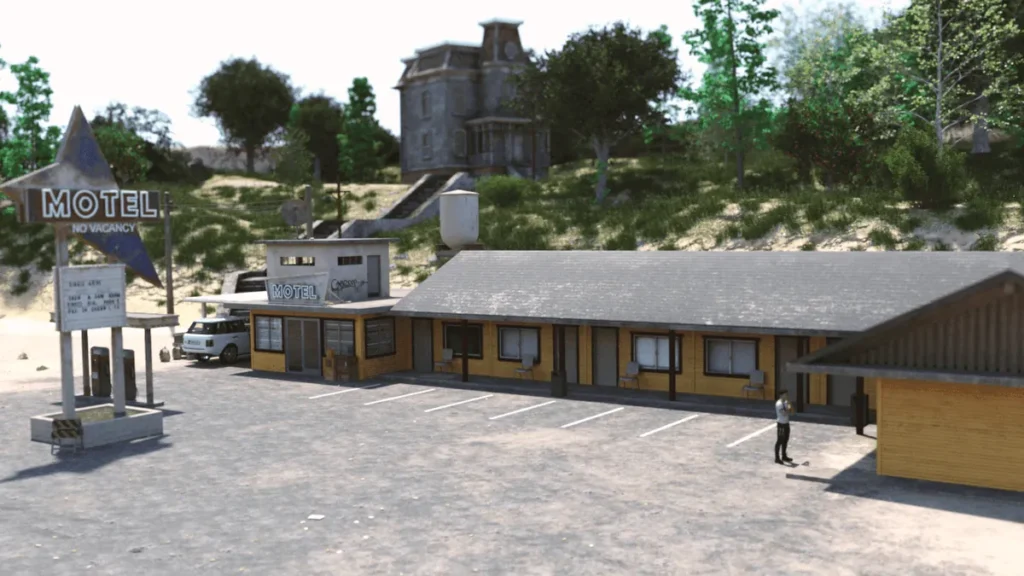
Gates Motel review
Explore the mysterious narrative, puzzle mechanics, and branching storylines of this immersive interactive experience
Gates Motel stands out as a captivating interactive game that blends atmospheric storytelling with challenging puzzle-solving mechanics. This immersive experience places you at the center of a mystery unfolding within an abandoned motel, where every detail matters and your choices shape the narrative. Whether you’re drawn to environmental storytelling, complex decision-making systems, or intricate inventory-based puzzles, Gates Motel delivers a unique gaming experience that rewards careful exploration and critical thinking. This comprehensive guide walks you through the core mechanics, gameplay systems, and strategic approaches to mastering this compelling interactive adventure.
Understanding Gates Motel: Core Gameplay Mechanics and Features
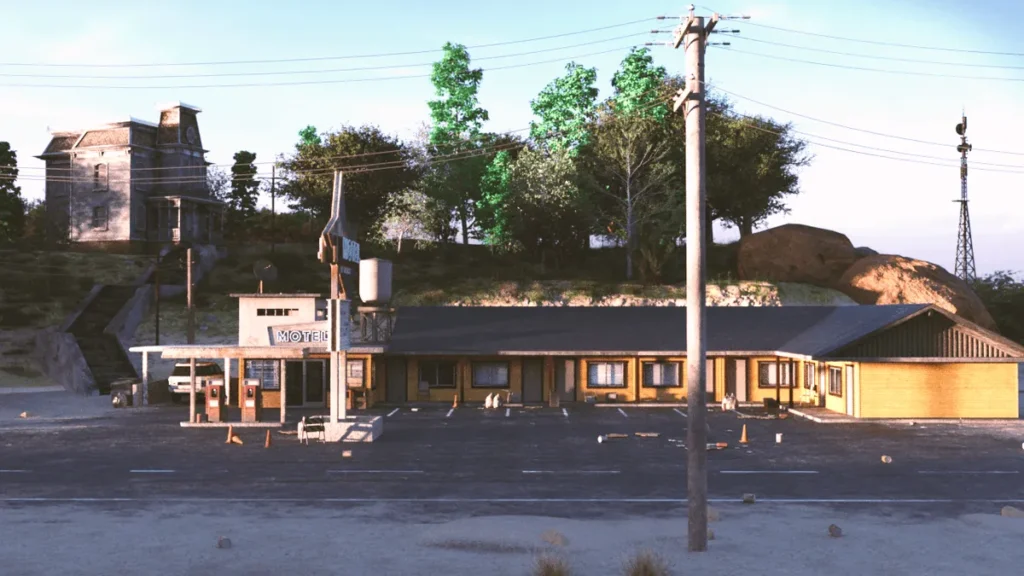
You arrive at the Gates Motel on a night where the rain isn’t just weather—it’s a character. 🚗💨 The windshield wipers struggle, the neon sign flickers a sickly welcome, and you’re already questioning every life choice that led you here. This isn’t a place you check into; it’s a mystery you unpack. Gates Motel masterfully wraps its core story—the truth behind its abandonment and the fate of its guests—around you, not through cutscenes, but through the very walls, objects, and choices you make. To truly master this experience, you need to understand its heart: the brilliant interplay of its gameplay mechanics. Let’s pull back the curtain on the systems that make this first-person adventure game so uniquely compelling.
What Makes Gates Motel’s Narrative Structure Unique? 🧩
Forget linear stories handed to you on a silver platter. The narrative in Gates Motel is something you excavate. You’re not a passive viewer; you’re an active archaeologist of anxiety. The game’s genius lies in its branching narrative choices, which are seamlessly woven into the fabric of exploration and interaction. There’s no obvious “good or evil” dialogue wheel. Instead, your narrative path is shaped by subtle, often nerve-wracking decisions.
🕯️ Pro Tip: Treat every interaction and discovered note as a potential fork in the road. The story doesn’t branch in giant, obvious ways, but through accumulated subtlety.
For instance, early on, you might find a personal letter from a former guest. Do you carefully return it to where you found it, respecting a ghost’s privacy, or pocket it as evidence? This isn’t flagged as a “MAJOR DECISION,” but the game remembers. Later, you may encounter a spectral presence. That simple, earlier act of respect could mean the difference between that entity offering a cryptic clue or fading away with a mournful wail, locking you out of a vital piece of the puzzle. This is the essence of Gates Motel gameplay mechanics—your agency feels genuine and the consequences organic.
The structure rewards the curious and punishes the reckless. I remember one playthrough where, in a rush, I forced open a desk drawer instead of finding the key. It gave me the document I needed, but the loud splintering noise seemed to echo… and later that night, my explorations were frequently interrupted by unsettling sounds outside the room, as if my vandalism had drawn unwanted attention. Another time, I took the patient route, found the key, and the subsequent hours were eerily, perhaps deceptively, quiet. This level of cause-and-effect makes the world feel alive and responsive.
These branching narrative choices are supported by a brilliant inventory management system that goes beyond being a simple backpack. Every item you pick up—a matchbook, a torn photograph, a rusted key—has narrative weight. A receipt isn’t just trash; it’s a timestamp, a name, a clue to a guest’s final hours. The game forces you to read, to inspect, to think about why things are where they are. Your inventory becomes a curated collection of mysteries, and combining items often doesn’t just solve a physical puzzle; it unlocks a new fragment of the story, proving you’ve connected the dots the game has laid out.
How Do Exploration and Environmental Storytelling Work? 🔍
If the narrative is the what, the exploration is the how. Gates Motel is a masterclass in interactive game exploration. From the moment you step out of your car, you are in a first-person perspective that is intimate and isolating. You don’t have a minimap or a quest marker. Your only guides are your own curiosity and the haunting environment itself.
This is where the game shines as one of the premier environmental storytelling games. The story is told through the silence of a made bed with a suitcase still open, through the water stain on the ceiling that looks unsettlingly like a face, through the collection of vintage bottles behind the front desk, one of which is cracked and empty. You learn about the motel’s cheery facade from its faded brochures, and about its decay from the mildew creeping up the bathroom walls. A child’s drawing tucked under a rug speaks volumes more than any ghostly monologue could.
The interactive game exploration is methodical and physical. You click to open drawers, peer behind paintings, and lift up floorboards with a satisfying creak. The time of day and worsening weather aren’t just for atmosphere—they gate your progress. A path washed out by the storm might be inaccessible until morning (or until you find a way to divert the water). A room might be too dark to search without a light source, forcing you to return later or find a generator. This makes the motel itself a dynamic puzzle box.
The first-person adventure game perspective is crucial here. Because you are so physically connected to the space, every discovery feels personal. Finding a hidden compartment isn’t a button prompt; it’s you noticing a slight gap in the floorboards and prying them up. This direct manipulation builds a powerful, almost tangible connection to the setting, making the unfolding horrors feel like they’re happening in your space.
Mastering Inventory Management and Puzzle-Solving Systems 🎒
Let’s get practical. The inventory management system in Gates Motel is your lifeline and your brain’s external hard drive. It’s a grid-based space where you’ll store everything from crucial keys to seemingly mundane debris. The trick is understanding that nothing is truly mundane.
- Examine Everything: A photograph isn’t just a picture. Right-click or hold a button to inspect it. You might notice a date scribbled on the back, a face scratched out, or a location in the background you haven’t visited yet. This act of close inspection is a core gameplay mechanic.
- Combine with Intent: The game rarely tells you to “combine item A with item B.” You have to deduce it. A wet document might need drying by a fire. A locked diary might need a hairpin carefully manipulated. The logic is grounded in the world, not arbitrary game logic.
- Space is Limited: You can’t carry everything. This forces meaningful choices. Do you take the heavy wrench that might open something, or the fragile crystal that seems to react to the strange energies in Room 7? You’ll often be making trips to a central “safe” room to store items, building your own evidence board across the motel.
This system feeds directly into the game’s status as a top-tier puzzle-solving adventure game. The puzzles are almost never isolated “lock and key” scenarios. They are environmental, narrative-driven challenges. Solving one typically requires intelligence gathered from multiple locations.
Here’s a real example from my playthrough: To access the old manager’s office, I needed a code. The code wasn’t written down anywhere. Instead, I had to:
1. Find a guest ledger in the lobby with a name circled.
2. Locate that guest’s room (Room 11).
3. In Room 11, find a postcard sent to that guest, postmarked with a date.
4. Cross-reference that date with a motel calendar found in the laundry room, where the manager had marked staff shifts with a specific numbering system.
5. Apply that system to the date to generate the numeric code.
The puzzle existed across the entire motel, and solving it didn’t just open a door—it revealed a relationship between the manager and a guest, deepening the central mystery. This is the hallmark of great puzzle-solving adventure games: the “aha!” moment rewards you with both progress and story.
To see how these core systems interlock to define the Gates Motel gameplay mechanics, let’s break them down:
| Mechanic Name | Description | Player Impact |
|---|---|---|
| Environmental Interaction | First-person manipulation of the world—opening, inspecting, and rearranging objects to find clues and triggers. | Drives exploration, makes the player an active participant in storytelling, and unlocks hidden areas. |
| Inventory & Combination | A limited-space system where collected items can be examined in detail and logically combined to create new tools or clues. | Forms the core of puzzle-solving, encourages careful observation, and makes every item potentially critical. |
| Consequential Decision-Making | Choices made through action, dialogue, and how you treat the environment, which the game remembers and reflects in later events. | Creates branching narrative paths, personalizes the horror experience, and increases replayability. |
| Integrated Puzzle Logic | Puzzles that require clues scattered across locations, demanding players make narrative connections, not just find keys. | Ties progression directly to understanding the story, rewarding intellectual engagement over simple searching. |
Speaking of branching narrative choices, let’s look at a concrete example of how a single moment can ripple through your entire playthrough. In the second act, you might encounter a shadowy figure lurking at the end of a hallway. It doesn’t attack; it simply gestures for you to follow before disappearing into a side room.
- Choice Path A (Trust): You follow it. Inside the room, you find it pointing to a loose vent cover. Removing it reveals a hidden crawlspace containing the missing journal of a victim, which provides explicit directions to a safe room and deeply humanizes the tragedy. However, by taking this “help,” you may have implicitly aligned yourself with one side of the motel’s spectral conflict, making other entities permanently hostile.
- Choice Path B (Caution/Attack): You refuse to follow or even shine your light aggressively at it. The figure vanishes with a sound of disappointment. The vent remains sealed to you. Without the journal, you must find another, more dangerous route to your objective, perhaps through the flooded basement, encountering different threats. Later, you might find that same figure passively observing other horrors, refusing to intervene because you rejected its initial offer.
This single decision—rooted in instinct, not a menu—alters available items, environmental hazards, narrative insight, and your relationship with the motel’s inhabitants. It perfectly illustrates how Gates Motel merges its mechanics into one cohesive, terrifying, and brilliant interactive game exploration experience. Your journey through the rain-soaked parking lot, into the dim lobby, and through each echoing room is yours alone, built piece by piece through your curiosity, your caution, and your choices.
Gates Motel delivers a sophisticated blend of atmospheric storytelling, strategic puzzle-solving, and meaningful player choice that creates a memorable interactive experience. The game’s strength lies in how its mechanics work in concert—exploration unlocks new areas and reveals hidden clues, inventory management forces strategic thinking about resource use, and decision-making ensures that no two playthroughs feel identical. The meticulous attention to detail, from journal entries to environmental clues, rewards players who engage deeply with the world. Whether you’re drawn to narrative-driven experiences or enjoy the satisfaction of solving complex puzzles, Gates Motel offers a compelling adventure that respects player intelligence and encourages multiple playthroughs to discover alternative storylines and hidden secrets.