Lineage or Legacy
Play Lineage or Legacy
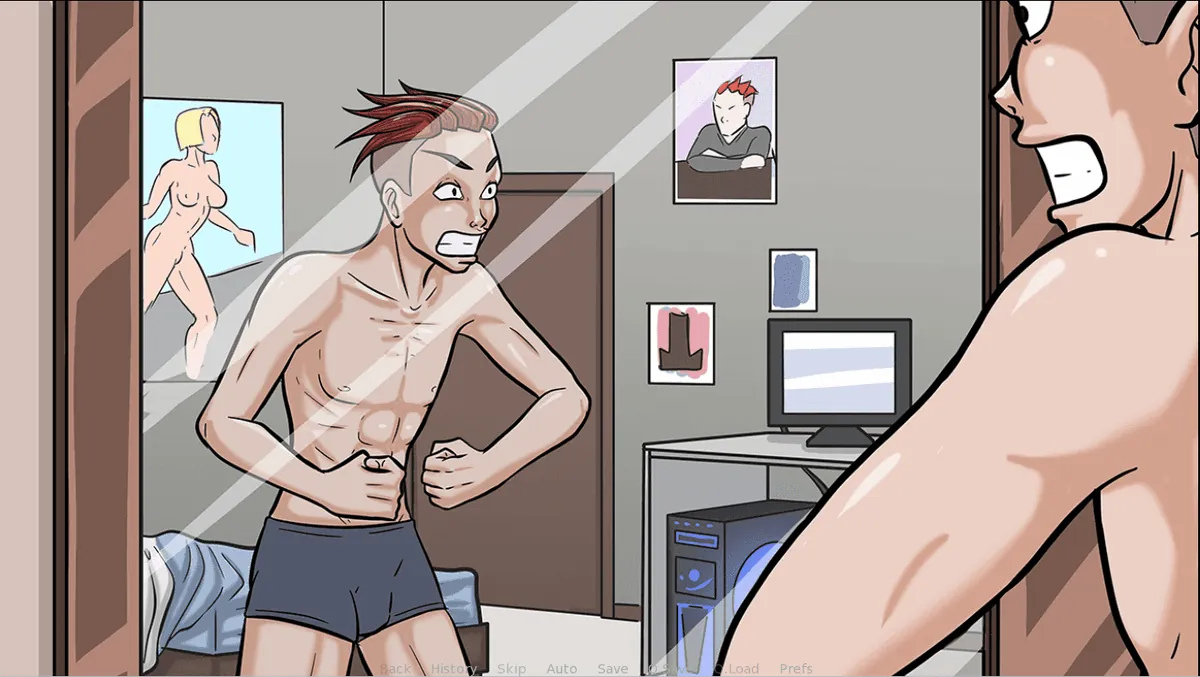
Lineage or Legacy Screenshots















Lineage or Legacy review
Explore how player decisions shape your story in this immersive visual novel experience
Lineage or Legacy stands out as a narrative-driven visual novel that places player agency at its core. Unlike traditional games where storylines follow predetermined paths, this experience remembers every decision you make—from monumental choices to seemingly mundane interactions. The game follows a young protagonist navigating life at LewSerr University after breaking free from family expectations and wealth. What makes Lineage or Legacy compelling is its refusal to offer simple moral answers. Instead, it presents morally gray choices that ripple through every subsequent chapter, forcing you to confront questions about loyalty, justice, and personal identity. Whether you’re drawn to complex character relationships, branching narratives, or games that challenge your values, this guide explores what makes Lineage or Legacy a unique entry in the visual novel genre.
Understanding the Core Gameplay and Decision System
So, you’ve started playing Lineage or Legacy and you’re standing at your first major story junction. Your heart’s pounding a little, your cursor is hovering, and you’re thinking, “Does this really matter?” Let me tell you from experience: it absolutely does. 🎮 This isn’t a game where you pick a “good” or “bad” dialogue option and watch a meter fill up. This is about your fingerprint on a living, breathing world. The core Lineage or Legacy gameplay mechanics are built on one powerful idea: your voice, your morality, your hesitation, and your courage are the primary tools for shaping your unique tale.
Forget what you know about simple branching paths. Here, the narrative operates more like a spiderweb. Tug on one delicate strand—a kind word to a sidelined character, a secret kept from a friend—and you’ll feel the entire structure vibrate with change, sometimes chapters later. This guide will pull back the curtain on how your choices become the story itself. We’re going to explore the brilliant, sometimes terrifying, consequence system, decode how relationships are built and broken, and map out how those branching narrative paths truly diverge. By the end, you’ll not only understand the system—you’ll master it.
How Player Choices Shape Your Story
I remember my first playthrough. Early on, I encountered a minor noble, Lord Everlin, being publicly belittled by a more powerful figure. The game presented me with three options: publicly defend him, subtly shift the conversation, or stay silent to avoid drama. Thinking it was just flavor text, I chose to stay silent. It felt safe, politically savvy. Big mistake. 😬
Three in-game months later, in Chapter 4 Act II, I was desperately seeking allies for a crucial vote. Lord Everlin, now in a position of influence, coldly refused. “You are a ghost in the halls of power,” he said. “You make no sound, take no stand. Why should I lend you my voice now?” That moment was a revelation. Lineage or Legacy doesn’t have “minor” choices. It has seemingly minor choices whose significance only blooms with time. The game’s decision-based storytelling philosophy is that character is defined not in grand speeches, but in quiet moments of cowardice or courage.
The genius lies in the nuance. You are rarely choosing between a paragon of virtue and a cartoonish villain. You’re navigating murky, morally complex grey areas. Do you expose a corruption that will destabilize the kingdom’s economy and hurt the common folk, or do you bury it to maintain order, allowing the guilty to prosper? There’s no “right” answer, only your answer, and the game remembers.
Pro Tip: Start a personal gaming journal. After each session, jot down your big decisions and why you made them. When consequences ripple out later, you’ll have a roadmap of your own moral compass, and it makes a second playthrough fascinating.
This is the heart of how do choices affect Lineage or Legacy story. They don’t just alter a line of dialogue; they reshape character motivations, open or seal entire plot threads, and determine who stands with you—or against you—when the storm finally breaks. Your story is a mosaic, and every tiny, colored piece you place changes the final picture.
The Consequence System: Every Decision Matters
Let’s get into the nuts and bolts. The player choice consequences visual novel fans dream of is executed here through what I call the “Echo System.” Every decision creates an echo—a persistent data point in the game’s narrative code. These echoes don’t fade. They interact, combine, and amplify.
Think of it like this: choosing to spend an afternoon training with the royal guard isn’t just about a temporary stat boost. It’s an echo that says, “I value martial prowess.” Later, when a military crisis hits, that echo might resonate, giving you the option to personally lead a charge—an option that wouldn’t exist if your echoes were all about bookish study. The game is constantly cross-referencing your entire history of actions to determine what you can do, say, and even perceive.
A perfect case study is the now-famous ‘Midnight Rooftop Confession’ scene. It’s a pivotal moment with a central character, Kaelen, who shares a vulnerable secret about their lineage. The game doesn’t give you a simple “Romance / Friendzone” button.
| Scenario | Your Available Choices | Immediate & Long-Term Consequences |
|---|---|---|
| The Midnight Rooftop Confession | 1. Reciprocate feelings openly and passionately. 2. Acknowledge the bond but propose a deep, committed friendship. 3. Politely but firmly decline, citing duty or distance. |
1. Unlocks a unique romantic story arc, but may ignite jealousy in other characters, closing off some political alliances. Kaelen becomes your most ardent defender, but also your greatest vulnerability. 2. Forges an unbreakable platonic bond. Kaelen becomes a loyal confidant and ally without romantic tension, keeping other relationship paths cleanly open. This can lead to a powerful “found family” ending. 3. Preserves total political flexibility. However, Kaelen becomes distant, and their storyline diverts. They may later align with a faction opposed to you, forcing a heartbreaking confrontation. |
| The Corporate Whistleblower Moment | 1. Leak the evidence anonymously to the press. 2. Confront the CEO privately with a threat. 3. Bring the evidence to a government regulator you trust. |
1. Causes public scandal and stock crash. Gains you public favor as a “hero of the people,” but makes you a permanent target for corporate assassins and closes off all business-related story branches. 2. Creates a tense, powerful enemy who now respects/fears you. Unlocks a dangerous “shadow war” narrative path with high-risk, high-reward deals in the underworld. 3. Is the “slow burn” legal path. It takes longer for justice to manifest, but it builds your reputation as a principled and strategic player within established systems, opening doors to high-level political careers. |
See what I mean? 🤯 There’s no “best” route. There’s only the route that aligns with the person you’re role-playing. This system ensures that your journey through Lineage or Legacy is deeply personal. The game’s current development state, Chapter 4 Act II, is already sprawling with these interconnected consequences, and the developers are actively weaving new narrative possibilities into this existing web with each update.
Character Relationships and Branching Paths
If consequences are the engine, then the character relationship system is the beating heart of the experience. Relationships here are not measured by a simple “Affection Level” bar you max out with gifts. They are living dynamics, built on trust, shared secrets, demonstrated values, and sometimes, healed betrayals.
Each major character has an internal compass and memory. Your actions are constantly being evaluated against their personal beliefs. Help a character achieve their dream, and you earn deep loyalty. Make a choice that goes against their core morality—even if it’s for a “greater good”—and you’ll see a subtle but permanent shift. They might not leave your side, but their dialogue will cool, their advice will become more guarded, and in a critical moment, they might hesitate.
This is where the branching narrative paths become truly spectacular. Let’s follow that example from earlier about Lord Everlin to its chilling conclusion.
The Cascading Consequence Example:
* Act I, Chapter 2: I chose to stay silent while Lord Everlin was humiliated.
* Act II, Chapter 1: Everlin’s dialogue became formal and distant. An optional side-quest to help his family disappeared from my log.
* Act III, Chapter 3: During a council debate, Everlin abstained on a vote crucial to my position, citing “insufficient evidence of commitment.”
* Act IV, Chapter 2 (Current): Facing the major story crisis, I lacked his vote. This forced me to seek an alliance with a more ruthless, unstable faction to survive, which in turn alienated another companion who valued honor above all. My single, early moment of silence had rerouted my entire political trajectory into a darker, more desperate path.
This is the spiderweb in action. One thread pulled, and the whole picture warped. By nurturing different relationships, you gain access to unique information, special abilities, and narrative branches that are literally invisible to other players. The friend you make in the gardens might later provide you with a key to a secret passage. The rival you best with mercy might send aid when you least expect it.
And all of this culminates in the game’s masterpiece: its multiple endings visual novel structure. We’re not talking about a “Good, Bad, and Secret” ending here. We’re talking about endings that reflect the precise political landscape you’ve created, the status of every major relationship (are they allies, lovers, bitter enemies, or deceased?), and the philosophical legacy of your rule or journey. One player might see an ending of peaceful reconciliation and rebuilt trust. Another, who played the same main story missions, might witness a fiery revolution they accidentally sparked. The branching narrative paths don’t just lead to different endings; they lead to different worlds at the end.
To navigate this, my practical advice is this: play authentically. Don’t try to game the system on your first run. Choose what feels right for the character you’re embodying. Embrace the surprises—both wonderful and tragic. That’s where the true magic of Lineage or Legacy lives. It’s in the heartbreaking rift with a friend you cherish, the unexpected alliance born from a shared moment of silence, and the profound satisfaction of seeing a world you genuinely built with your choices, for better or worse, unfold in a finale that could only ever belong to you. Your legacy is waiting to be written—one nuanced, resonant choice at a time. ✍️
Lineage or Legacy represents a sophisticated approach to interactive storytelling where your agency genuinely shapes the narrative experience. The game’s strength lies not in offering simple moral choices but in presenting nuanced, consequential decisions that force you to confront complex questions about loyalty, justice, and personal identity. From the protagonist’s journey of independence to the intricate web of character relationships and branching storylines, every element reinforces the core promise that your choices matter. Whether you’re seeking a deeply personal narrative experience, complex character dynamics, or a game that challenges your values, Lineage or Legacy delivers on multiple fronts. The ongoing development with regular chapter updates ensures the story continues to evolve, offering fresh content for both new and returning players. If you value player agency, moral complexity, and character-driven narratives in your gaming experience, Lineage or Legacy deserves a place on your list. Start your journey today and discover how your unique choices create a legacy entirely your own.